
Why U.S. Passport Applications Get Rejected (And How to Avoid It the First Time)
Blog post description.
1/18/20264 min read
Why U.S. Passport Applications Get Rejected (And How to Avoid It the First Time)
Few words create more anxiety than “passport application rejected.”
Rejection feels personal.
It feels sudden.
And it almost always feels unfair.
In reality, most passport rejections are predictable. They happen for the same reasons, over and over, because applicants misunderstand how strict—and how literal—the system really is.
This article explains why U.S. passport applications get rejected, what the system is actually flagging, and how to avoid submitting an application that stalls, pauses, or gets denied outright.
If you want speed, understanding rejection is essential.
Rejection vs Delay: Why the Difference Matters
First, an important clarification.
Not every problem is a rejection.
A delay means the application is paused pending review or correction
A rejection means the application cannot proceed as submitted
Both cost time.
But rejection is more disruptive because it often requires restarting or resubmitting.
Many people think they were “rejected” when they were actually delayed—and miss the opportunity to fix the issue early.
Understanding the distinction helps you respond correctly instead of panicking.
Reason #1: Wrong Application Category
This is the single most common cause of serious problems.
Applicants assume:
Renewal eligibility
First-time status
Replacement rules
When the system disagrees, the application stops.
Submitting as a renewal when you don’t qualify is especially costly because:
The system does not auto-correct
Processing pauses
You lose priority time
The application isn’t rejected immediately. It just sits—until time runs out.
Reason #2: Incorrect or Incomplete Forms
Forms are unforgiving.
Common form-related rejection triggers include:
Leaving required fields blank
Using outdated forms
Incorrect signatures
Inconsistent names or dates
Guessing instead of verifying
The system does not interpret intent.
It checks compliance.
One missing or incorrect detail can invalidate the entire submission.
Reason #3: Passport Photo Non-Compliance
Passport photo issues are one of the most frequent—and underestimated—causes of rejection or delay.
Photos are rejected for:
Shadows on the face or background
Non-uniform backgrounds
Incorrect head position
Glare from glasses
Hair or accessories obscuring features
A photo can look professional and still fail.
Under expedited processing, photo rejection is devastating because it resets timelines.
Reason #4: Citizenship or Identity Documentation Problems
The system requires very specific proof.
Rejections happen when:
Documents don’t meet eligibility requirements
Originals vs copies are incorrect
Documents are damaged or unreadable
Names don’t match across records
Adding extra documents does not fix this.
It often makes it worse.
Precision matters more than volume.
Reason #5: Name Changes Not Properly Documented
Name discrepancies are a major red flag.
If your name differs between:
Application
Photo ID
Citizenship documents
you must fully document the change.
Common mistakes include:
Assuming marriage certificates aren’t required
Submitting partial documentation
Ignoring small spelling differences
The system does not infer identity continuity.
It requires proof.
Reason #6: Payment Errors
Payment is not a minor detail.
Applications are rejected or paused when:
Fees are incorrect
Payment method is invalid
Fees are sent to the wrong recipient
There is no partial processing.
Until payment is correct, nothing moves.
Reason #7: Over-Submission of Documents
This surprises many people.
Submitting extra documents can trigger:
Manual review
Identity verification
Inconsistency checks
Manual review is slow.
The system is designed to process exact requirements, not personal explanations or additional records.
Reason #8: Damaged Passport Misclassification
Not all damage is equal.
Applicants often assume:
Minor damage doesn’t matter
A damaged passport can still be renewed
If damage affects integrity or readability, renewal eligibility disappears immediately.
Submitting a damaged passport under the wrong path often leads to rejection or long delays.
Reason #9: Urgent Travel Assumptions
Urgency does not override rules.
Applications are rejected or delayed when applicants:
Assume urgent travel guarantees processing
Choose urgent handling without qualifying
Submit incomplete applications hoping urgency will help
It won’t.
Urgent cases are often reviewed more strictly, not less.
Reason #10: Timing Errors
Some applications fail simply because they were submitted too late.
When timelines no longer align:
Corrections aren’t possible
Appointments aren’t available
Options collapse
The system doesn’t warn you when time is no longer on your side.
It just stops working in your favor.
Why Rejections Feel Sudden (But Aren’t)
Most rejections feel abrupt because:
The system is silent while reviewing
Problems surface late
Applicants assume progress
By the time rejection or correction is communicated, weeks may already be gone.
This is why front-loading correctness matters so much.
How to Avoid Rejection the First Time
Successful applications share the same traits:
Correct category selection
Clean, complete forms
Fully compliant photos
Minimal, precise documentation
Verified payment
Realistic timelines
They don’t rely on hope.
They rely on alignment.
Why Fixing a Rejection Is Slower Than Preventing One
Corrections often require:
Additional review
Manual handling
Reset timelines
Even expedited processing cannot erase this delay.
Submitting once, correctly, is always faster than fixing later.
The Mental Trap That Causes Rejections
Most rejections don’t come from ignorance.
They come from assumptions under stress.
People rush because they’re anxious.
They guess because they’re afraid of waiting.
They over-submit because they want certainty.
Ironically, those reactions create the very delays they’re trying to avoid.
A Final Reality Check
Before you submit anything, ask:
Am I guessing any part of this process?
Am I assuming eligibility instead of verifying it?
Am I adding steps or documents “just in case”?
If the answer is yes, pause.
Pausing for clarity is faster than restarting after rejection.
If you want to avoid rejection, delays, and costly restarts, you don’t need more scattered advice.
You need a complete framework.
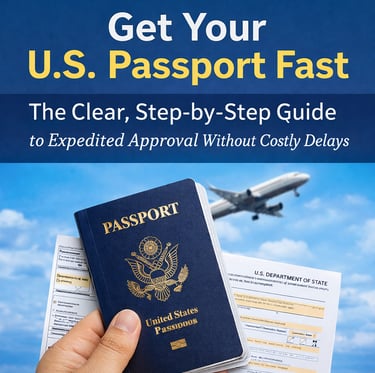
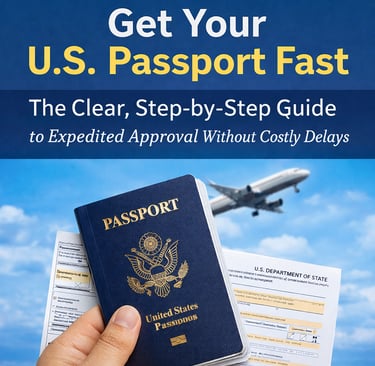
The Get Your U.S. Passport Fast guide shows you:
Exactly where applications get rejected
How to choose the right path the first time
How to submit once, cleanly, and confidently
A final checklist to eliminate mistakes before they cost time
👉 Get the Complete Expedited Passport Guide
It’s built for people who want speed without risking rejection.
Because the fastest passport application is still the one that never has to be fixed.https://expeditedpassportusa.com/passport-fast-guide
Contact
Fast help with your passport needs
infoebookusa@aol.com
© 2026. All rights reserved.