
The Final Pre-Travel Passport Checklist Read This Before You Go to the Airport — Not at the Gate
Blog post description.
2/1/20263 min read
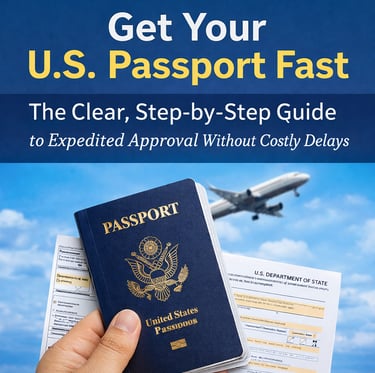
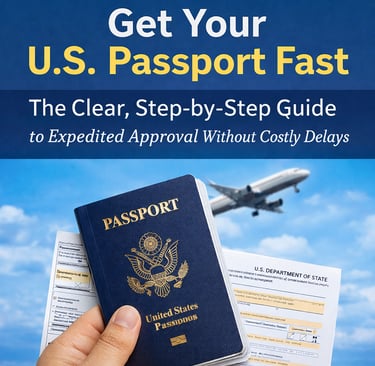
The Final Pre-Travel Passport Checklist
Read This Before You Go to the Airport — Not at the Gate
Most passport disasters don’t happen because people didn’t apply correctly.
They happen because people assume that approval equals readiness to travel.
It doesn’t.
Between having a passport and actually boarding a plane, there is a final layer of checks that airlines enforce ruthlessly. Miss one of them, and your trip ends before security.
This is the final checklist.
Not theory.
Not planning.
The last reality check before you leave home.
Why This Checklist Exists
If you’ve made it this far:
Your passport is approved or about to be
Your travel date is real
Your margin for error is small
At this stage, mistakes are no longer fixable.
This checklist is designed to catch the exact issues that stop people at the airport, even when everything “should be fine.”
Step 1: Confirm You Physically Have the Passport
This sounds obvious. It isn’t.
Before anything else, confirm:
The passport is in your possession
Not “approved”
Not “shipped”
Not “arriving tomorrow”
Airlines do not care about status updates.
If it’s not in your hands, you are not traveling.
Step 2: Check Passport Expiration Against Your Return Date
Do not check expiration against departure.
Check it against:
Your return date
Plus destination requirements
Ask yourself:
Does my passport remain valid 6 months after I return?
Does my destination require less — or more?
If there is any doubt, airlines will deny boarding.
Step 3: Count Blank Pages (Physically)
Do not assume.
Open the passport and count:
Fully blank pages
Not pages with stamps
Not partially used pages
Many countries require:
One or two completely blank pages
Airlines check this visually.
Step 4: Inspect Passport Condition Like an Airline Would
Look at your passport the way a risk-averse gate agent would.
Red flags include:
Water damage (even old)
Loose or lifting cover
Torn pages
Excessive wear
Smudged data page
If it looks questionable, the airline may refuse boarding even if immigration might accept it.
Airlines don’t gamble.
Step 5: Verify Name Match — Character by Character
Compare:
Passport name
Airline ticket name
Look for:
Missing middle names
Hyphens
Extra spaces
Order differences
Airlines do not assume identity continuity.
Small mismatches = big problems.
Step 6: Check Destination Entry Rules (Not Just Visa)
Entry rules include more than visas.
Verify:
Passport validity requirements
Blank page requirements
Special passport acceptance rules
Emergency passport acceptance (if applicable)
Do not rely on memory or past trips.
Rules change.
Step 7: Check Transit Country Requirements
Even if you’re not leaving the airport.
Transit countries may require:
Transit visas
Minimum passport validity
Specific passport conditions
Airlines evaluate the full itinerary, not just your destination.
One overlooked transit rule can block the entire trip.
Step 8: Confirm Airline-Specific Passport Policies
Some airlines:
Refuse emergency passports
Apply stricter validity rules
Enforce conservative interpretations
Airline rules can be stricter than government rules.
When in conflict, airline rules win at the gate.
Step 9: Re-Check Everything 48 Hours Before Departure
Do not do this only once.
Re-check:
Passport in hand
Condition
Validity
Entry rules
Transit rules
This is when problems still have a chance—however small—to be addressed.
Step 10: Prepare for the Airport Check
At the airport:
Have your passport easily accessible
Expect visual inspection
Expect questions
Gate agents are not being difficult.
They are protecting the airline.
Calm confidence helps. Arguments do not.
Why People Fail This Checklist
People fail because they assume:
Approval = acceptance
Immigration = airline
Past success = current rules
“It should be fine” = compliance
None of these assumptions hold at the gate.
The Moment Everything Becomes Irreversible
Once boarding closes:
No corrections are possible
No explanations matter
No urgency helps
Everything that could have saved the trip had to happen before leaving home.
How Experienced Travelers Use This Checklist
They don’t skim it.
They use it:
Every international trip
Even with new passports
Even with routine destinations
Experience teaches one lesson:
airports are the worst place to discover problems.
Why This Checklist Is the Final Layer of Speed
Speed isn’t just about getting a passport fast.
It’s about:
Not missing flights
Not rebooking
Not restarting processes
Not paying for mistakes
The fastest outcome is the one that never breaks at the last step.
Final Reality Check
Before you leave for the airport, ask yourself:
Would an airline risk a fine on my passport?
Is there anything here that creates doubt?
Am I relying on hope—or confirmation?
If there is doubt, stop.
A delayed trip is painful.
A denied boarding is devastating.
If you want end-to-end certainty, not just a passport approval, this is why the guide exists.
The Get Your U.S. Passport Fast guide gives you:
The complete system from application to boarding
All decision traps explained
All silent failure points covered
Final checklists that prevent last-minute disasters
👉 Get the Complete Expedited Passport Guide
Because the passport process doesn’t end when you’re approved.
It ends when you’re on the plane.https://expeditedpassportusa.com/passport-fast-guide
Contact
Fast help with your passport needs
infoebookusa@aol.com
© 2026. All rights reserved.